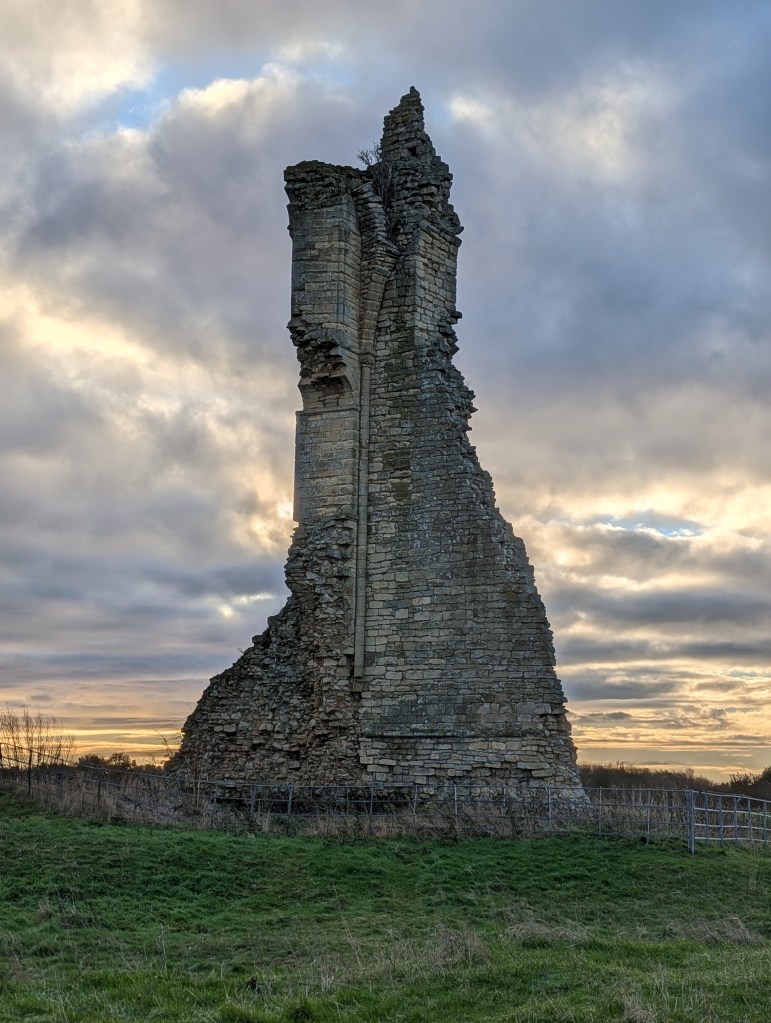
Kirkstead Abbey was once a thriving Cistercian monastery, standing proudly in what is now the quiet outskirts of Woodhall Spa. Like many religious houses of its time, its story came to an abrupt end during the reign of Henry VIII, when the Dissolution of the Monasteries brought ruin to many such institutions. In Kirkstead’s case, several of its members met a grim fate, and the abbey itself was repurposed before falling into decay. Today, only fragments remain — part of a wall, a window, the chantry chapel, and a lingering sense of mystery.
Among the most enduring tales connected with Kirkstead Abbey are those of secret tunnels said to run beneath the ruins. This is a familiar feature in the folklore of monasteries and convents across England — the idea that beneath these places of prayer ran hidden passageways, used by monks and nuns to travel unseen.
These stories tell us something about how people have long viewed religious houses: as places shrouded in secrecy, where appearances might not always match reality. In Kirkstead’s case, one version claims that a tunnel once linked the abbey to the Bluebell Inn at Tattershall Thorpe — one of the oldest inns in the area. The implication is hard to miss: perhaps the monks were not above sneaking out for an ale, or arranging for drink to be smuggled in.
Another version has the tunnels running instead to Tattershall Castle. This, too, makes a certain kind of sense. The castle was the nearest seat of power, and connections — both literal and symbolic — between church and authority were often the subject of local gossip. It’s worth remembering that records from Kirkstead mention an abbot accused of overstepping his power, misusing funds, and engaging in dubious trading. Such tales of hidden tunnels might therefore reflect not just imagination, but suspicion — a metaphor for the hidden dealings beneath the surface of piety.
Interestingly, similar stories exist about the Tower on the Moor, a hunting lodge built by the Cromwell family around the same time as Tattershall Castle. In this case, the idea of an underground link almost makes practical sense. There would have been frequent movement between the two sites — staff transporting food, furniture, and supplies — and when the Tower was later dismantled to repair parts of the castle, there would have been constant journeys carrying bricks. It’s easy to imagine how, over time, the idea of a tunnel might have grown from simple jest into accepted legend.
In truth, of course, the idea of such a tunnel is highly unlikely. Constructing a passage between these sites would have been almost impossible, not to mention ruinously expensive. However, 18th-century plans do show evidence of a subterranean canal running through the area. This could well have been part of the abbey’s water or drainage system — perhaps even connected to the River Witham, which the monks are known to have accessed.
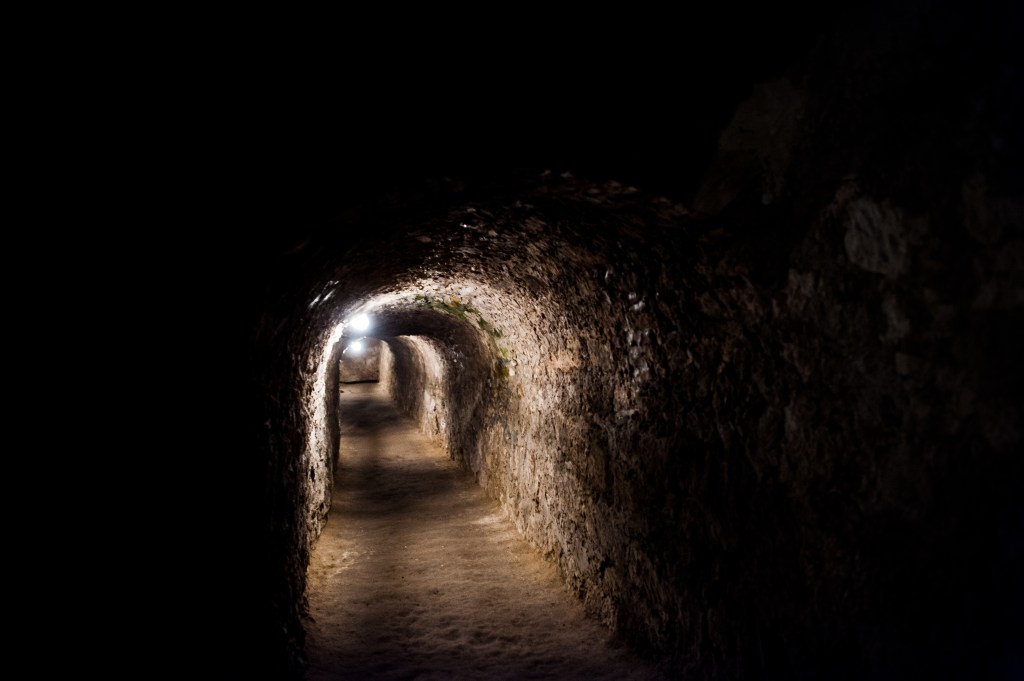
As for the later tale of the “bugler’s ghost” said to haunt the ruins, there may be a simpler explanation. Local reports mention that sheep occasionally fell into one of the old hollows, which was later filled in for safety. Perhaps the sound of distressed animals echoing underground gave rise to stories of a ghostly bugler — another layer added to the legend of Kirkstead’s hidden depths.
 Folklore Unfolded
Leave a comment